
 Exclusive distributor of the DOPPLER brand
PL · LT · LV · EE
Inspection technique
Showing all 2 results
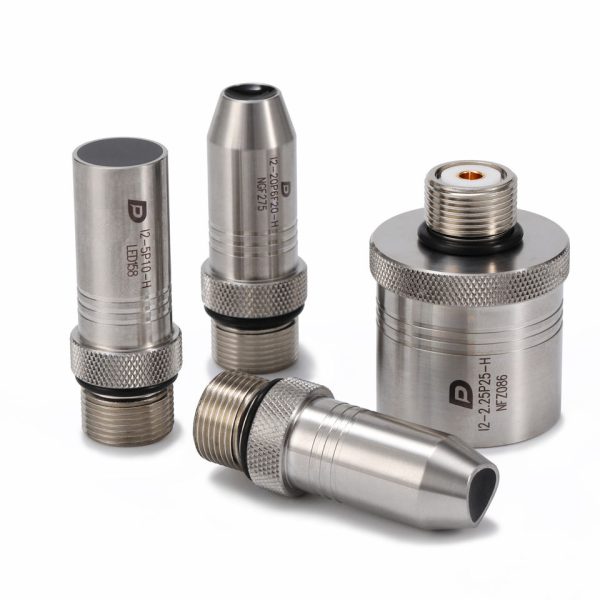
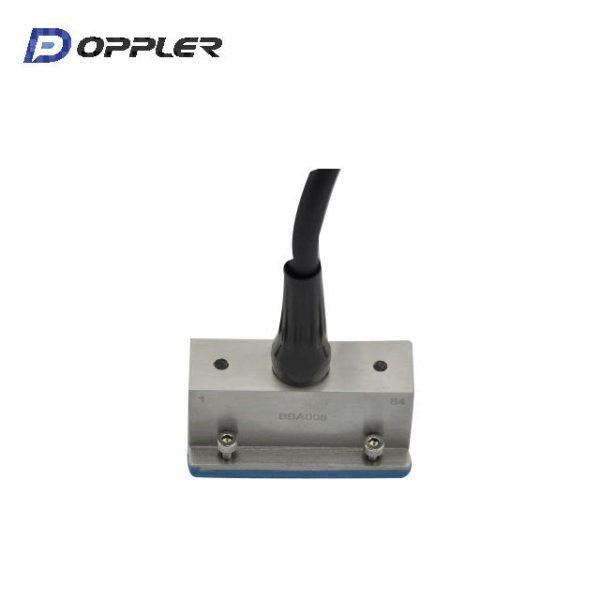
Phased array probe models (5)
Type a part number or pick the parameters. Click a model to open its series and send an inquiry.
| Part number | Application | MHz | Elements | Pitch [mm] | Elevation [mm] | Aperture [mm] | Housing |
|---|---|---|---|---|---|---|---|
| 3.5L128-0.5*10-B9 | immersion | 3.5 | 128 | 0.5 | 10 | 64 | B9 |
| 5L64-1.0*10-B9 | immersion | 5 | 64 | 1 | 10 | 64 | B9 |
| 5L128-0.75*10-D7 | immersion | 5 | 128 | 0.75 | 10 | 96 | D7 |
| 5L128-0.8*10-B60 | immersion | 5 | 128 | 0.8 | 10 | 102.4 | B60 |
| 5L128-0.8*12-B60 | immersion | 5 | 128 | 0.8 | 12 | 102.4 | B60 |
Can’t find it? Send us the part number and we will match a model.
Send the part numberParameters as specified by the manufacturer. Cable length and connector are agreed in the quotation.
Conventional probe models (29)
Type a part number or pick the parameters. Click a model to open its series and send an inquiry.
| Part number | Type | MHz | Crystal [mm] | Crystal type | Angle |
|---|---|---|---|---|---|
| I2-0.5C19 | immersion | 0.5 | 19 | composite | — |
| I2-0.5C25 | immersion | 0.5 | 25 | composite | — |
| I1C10NF | immersion | 1 | 10 | composite | — |
| I1C20N | immersion | 1 | 20 | composite | — |
| I1C24N | immersion | 1 | 24 | composite | — |
| I2C20N | immersion | 2 | 20 | composite | — |
| I2.5P10N | immersion | 2.5 | 10 | standard | — |
| I2.5C12.5*12.5A45 | immersion, shear wave | 2.5 | 12.5×12.5 | composite | 45° |
| I2.5P14N | immersion | 2.5 | 14 | standard | — |
| I2.5P20N | immersion | 2.5 | 20 | standard | — |
| I5C6N | immersion | 5 | 6 | composite | — |
| I5P6N | immersion | 5 | 6 | standard | — |
| I5C10CF40 | immersion | 5 | 10 | composite | — |
| I5C10CF60 | immersion | 5 | 10 | composite | — |
| I5P10N | immersion | 5 | 10 | standard | — |
| I5P14N | immersion | 5 | 14 | standard | — |
| I5C18NF | immersion | 5 | 18 | composite | — |
| I5C19NF | immersion | 5 | 19 | composite | — |
| I5P20N | immersion | 5 | 20 | standard | — |
| I10C3NF | immersion | 10 | 3 | composite | — |
| I10C6N | immersion | 10 | 6 | composite | — |
| I10P6N | immersion | 10 | 6 | standard | — |
| I10C10CF25 | immersion | 10 | 10 | composite | — |
| I10C10F25 | immersion | 10 | 10 | composite | — |
| I15C3N | immersion | 15 | 3 | composite | — |
| I15P6F25 | immersion | 15 | 6 | standard | — |
| I15P6F38 | immersion | 15 | 6 | standard | — |
| I15P6N | immersion | 15 | 6 | standard | — |
| I20C6N | immersion | 20 | 6 | composite | — |
Can’t find it? Send us the part number and we will match a model.
Send the part numberParameters as specified by the manufacturer. Cable length and connector are agreed in the quotation.
Why parts are inspected in a water bath
In contact testing the couplant layer decides the result: its thickness changes with every movement of the hand, and the probe face wears against the surface. In immersion testing there is a constant water path between probe and part. Coupling is repeatable, the probe does not wear, and the beam can be focused exactly at the depth of interest. That is why castings, forgings, bar stock, composite panels and additively manufactured parts are inspected this way in laboratories.
Repeatability has another consequence: immersion inspection is easy to automate. The probe sits on a manipulator that moves it across a grid and the result is recorded as a C-scan of the whole surface. Our motion hardware for this is FC54 with an XYZ water tank and a 350 × 400 mm working stroke, or FC-XY02-DD for plates and sheets.
Two standards and the frequency range
Doppler immersion probes come in the European I1 standard — top mounted, 1.8 or 2.5 m cable, Lemo 01 connector — and the North American I3 standard with a 9.7 mm outside diameter for tight fixtures. The range runs from 1 to 25 MHz with 3–20 mm elements, in the same PL, PH and C performance variants as Conventional ultrasonic probes, so they are selected the same way.
The phased array immersion series stands apart: watertight to 1 metre, stainless steel housing, acoustic impedance matched to water. It goes mainly into in-line inspection stations where one machine has to check every part without an operator.
Frequently asked questions
Can a liquid other than water be used?
Yes, the probes are built for full or partial immersion in water or another liquid — you only need its sound velocity and chemical compatibility with the housing. With water, remember to degas it and hold the temperature steady, because velocity in water is markedly temperature dependent and shifts the interface echo.
Is a full tank always needed?
Not always. Local inspection can be done with partial immersion or a squirter-type water column, and on pipes and plates the wheel probe with its water coupling does the job. A full bath is needed where the whole part has to be inspected with a recorded result.
How is focusing chosen?
The focus is set at the depth where discontinuities are expected, taking the water path into account — changing the probe-to-surface distance moves the focus inside the material. For full-thickness coverage you either make several passes with different settings or use a focused probe with a suitable focal length.