
Shop · Category
UV-A LED lamps for MT and PT
Uniflux 365 nm UV-A LED lamps — stationary luminaires and hand lamps, battery and mains powered — for evaluating fluorescent indications in MT and PT.

Showing all 7 results
-
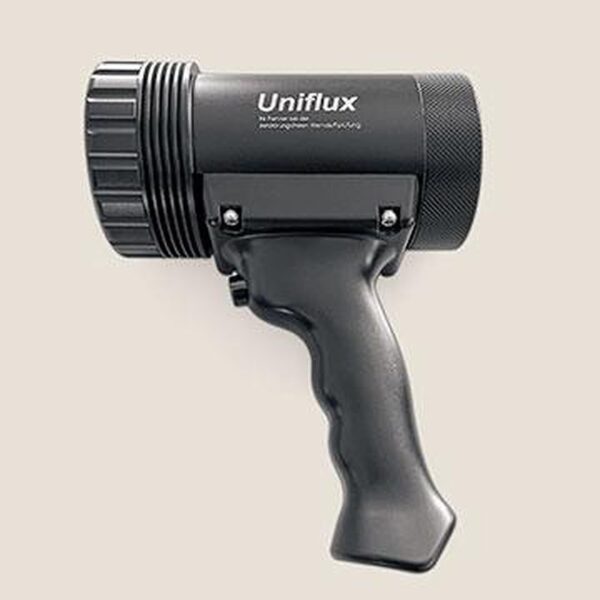
Uniflux LED-5000-KIT — UV-A LED hand lamp kit
Ask about this product -
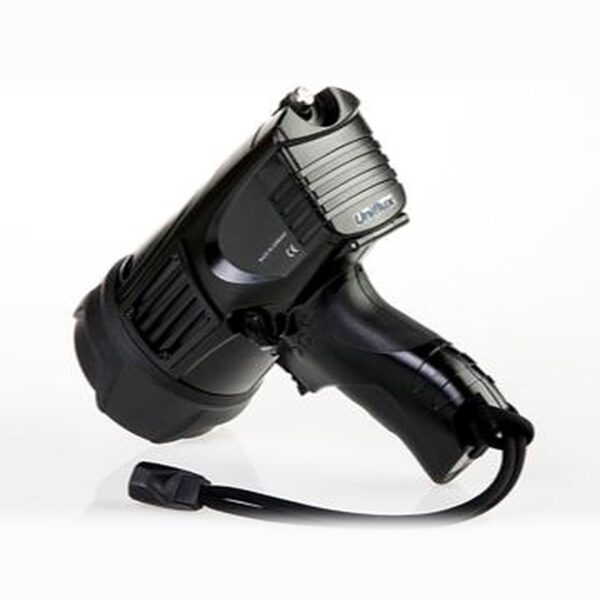
Uniflux LED OS — battery UV-A LED hand lamp
Ask about this product -
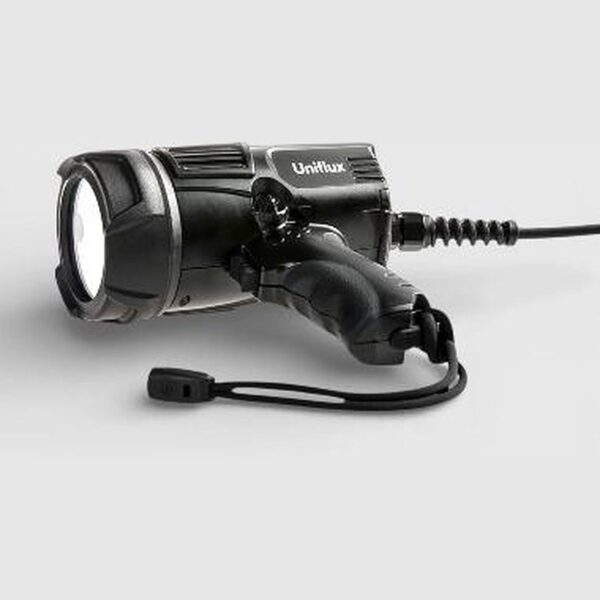
Uniflux LED-OS-K — mains UV-A LED hand lamp
Ask about this product -
Uniflux LED-ST — UV-A LED hand lamp
Ask about this product -
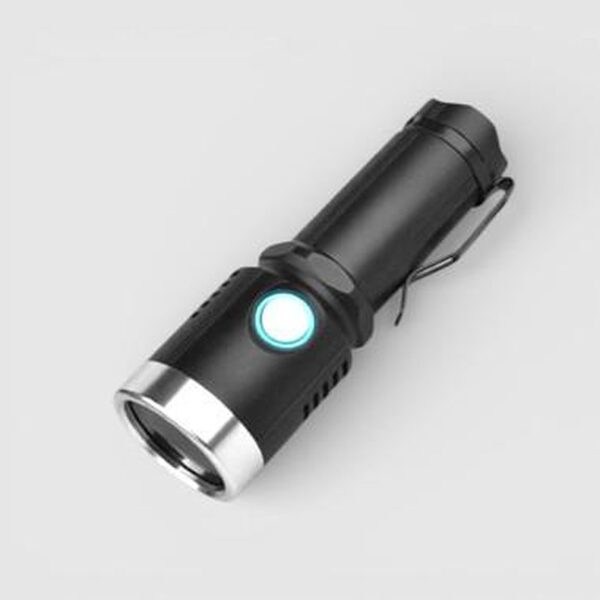
Uniflux LED-1580-L — compact UV-A LED hand lamp
Ask about this product -
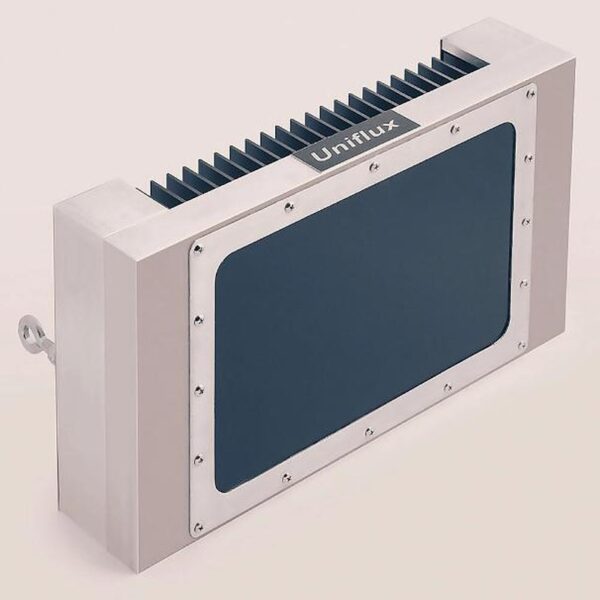
Uniflux UF LED 400 — stationary UV-A LED luminaire
Ask about this product -
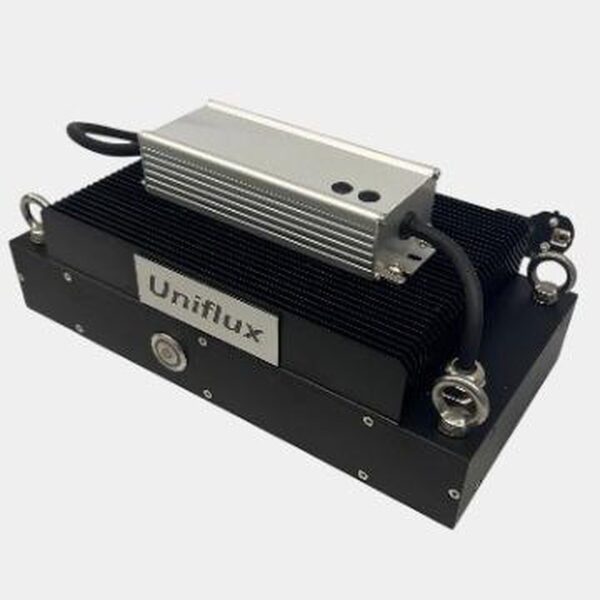
Uniflux UF LED 300 — fanless stationary UV-A LED luminaire
Ask about this product
UV lamps for fluorescent MT and PT
Indications from fluorescent magnetic inks and penetrants glow only under UV-A radiation. EN ISO 3059 sets the viewing conditions: at least 10 W/m² (1000 µW/cm²) UV-A at the test surface, ambient visible light of no more than 20 lx and a wavelength around 365 nm.
Intensity falls with distance, so what counts is the value at the test surface at the working distance — checked with a UV-A radiometer. The lamps in this category work in the UV-A band, most at 365 nm, and those with a stated intensity give, according to the manufacturer, many times the required minimum.
Uniflux UV-A LED lamps compared
| Lamp | Type | Power | UV-A intensity (per manufacturer) |
|---|---|---|---|
| LED-5000-KIT | hand lamp, kit in a case | battery or mains | up to 5000 µW/cm² (50 W/m²) |
| LED OS | hand lamp with white light | battery | 40 W/m² (4000 µW/cm²) at 400 mm |
| LED-OS-K | hand lamp with white light | mains, 5 m cable | over 60 W/m² (6000 µW/cm²) |
| LED-ST | hand lamp with LED torch | battery or mains | not stated by the manufacturer |
| LED-1580-L | compact hand lamp | battery, USB charging | approx. 12,500 µW/cm² (125 W/m²) at 400 mm |
| UF LED 400 | stationary | 230 V mains | up to 8000 µW/cm² (80 W/m²) at 30 cm |
| UF LED 300 | stationary, fanless | 230 V mains | 16,000 µW/cm² (160 W/m²) at 38 cm |
Stationary or hand-held
Stationary luminaires light a large area evenly and suit a darkened booth where batches of parts are inspected — the UF LED 300 is cooled without a fan, so it runs silently. Hand lamps are aimed at a specific spot: a weld, an edge, a bore, the inside of a part.
A battery lamp helps in the field and wherever there is no socket; a mains lamp suits the bench when constant output over a full shift matters. LEDs reach full output as soon as they are switched on and run cooler than the old mercury lamps; the stationary luminaires last around 10,000 hours according to the manufacturer.
Frequently asked questions
What UV-A intensity is required for fluorescent inspection?
Under EN ISO 3059 at least 10 W/m² (1000 µW/cm²) at the test surface, with ambient visible light of no more than 20 lx. It is measured with a UV-A radiometer at the distance you actually work from.
How do I convert W/m² to µW/cm²?
1 W/m² equals 100 µW/cm². The required minimum of 10 W/m² is therefore 1000 µW/cm², and a lamp giving 8000 µW/cm² delivers 80 W/m². When comparing lamps, also check the distance at which the manufacturer measured the intensity.
Can a UV lamp also be used for penetrant testing?
Yes. Fluorescent penetrants are assessed under the same conditions as magnetic inks — UV-A at 365 nm with darkening to EN ISO 3059. Penetrant testing consumables are in Penetrant testing consumables (PT).
Do I need eye protection when working with UV-A?
Yes — do not look into the beam and wear UV-protective glasses. Safety goggles come with the LED-5000-KIT. Before assessing indications, give your eyes a moment to adapt to the darkness.
Which lamp works best in the field?
A battery lamp: the compact, high-output LED-1580-L, the LED OS with additional white light, or the LED-5000-KIT with a spare battery in its case. In the field you also need shading so that daylight stays below 20 lx.